
Automatic Driving Lessons: A Complete UK Guide
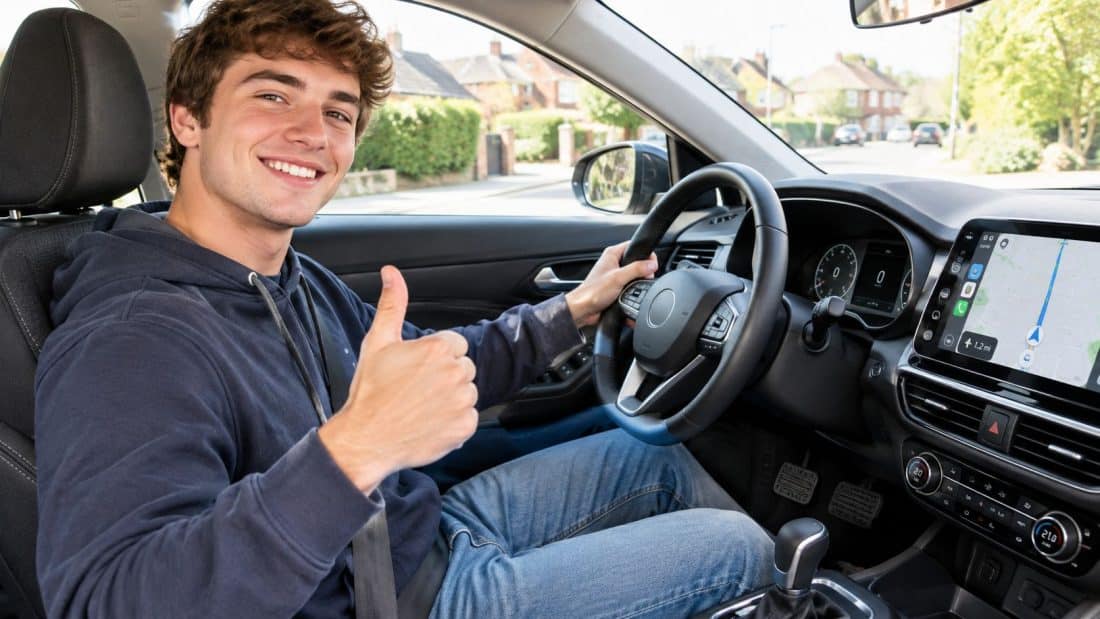
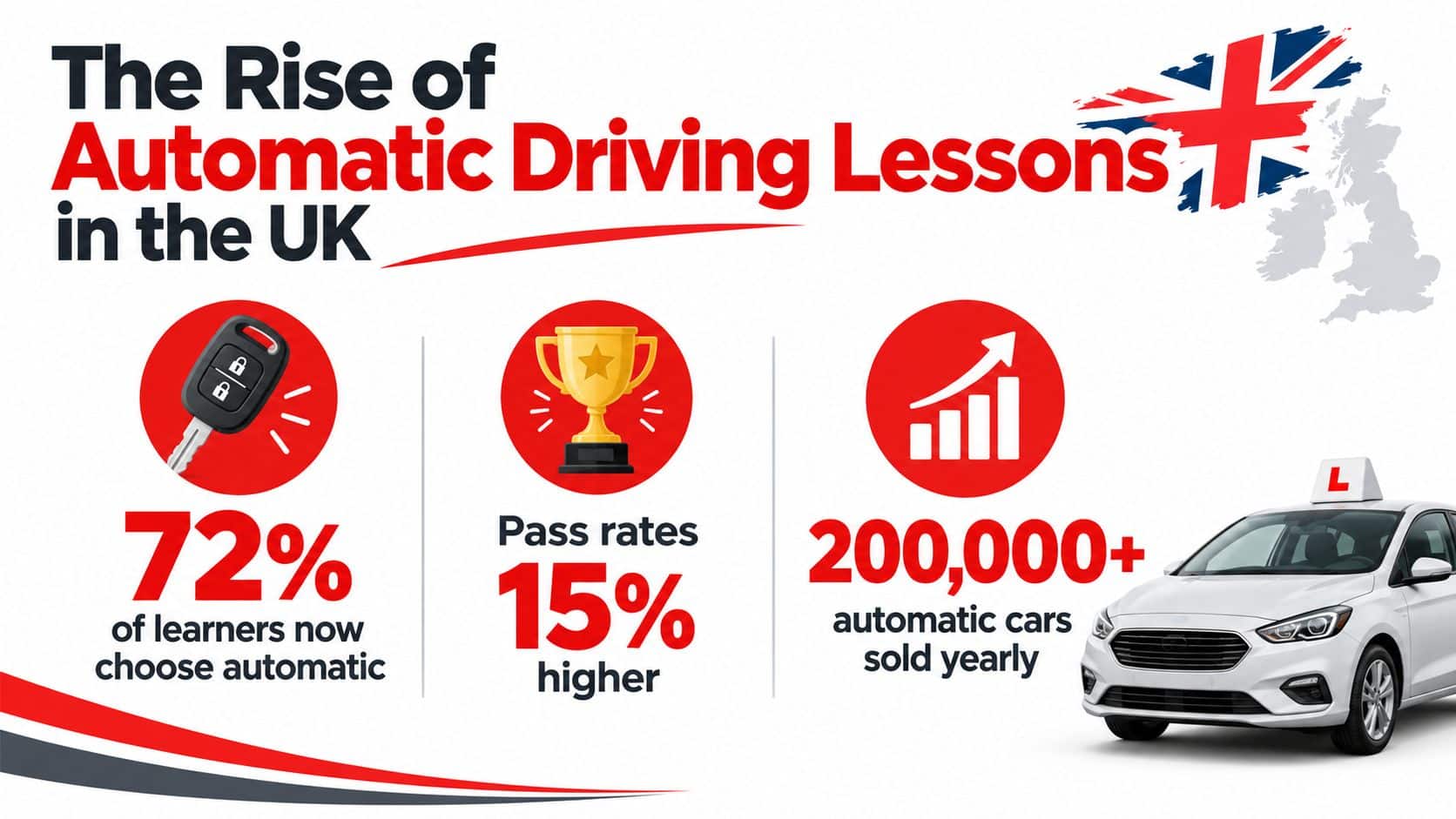
Automatic driving is no longer a side route in the UK learner market. DVSA-based analysis says automatic tests made up 26% of all car driving tests in 2024/25, which is 479,556 automatic practical tests out of 1,839,815 total tests. That was 6.1% in 2012/13 and about 4% in 2007/08, so this is a real shift in how people learn, not a passing trend. The AA's UK driving test analysis shows automatic tuition has moved from niche to mainstream, and a good DVSA-approved automatic instructor can now be a practical, normal choice rather than a special case.
What matters for learners is simple. An automatic driving lesson still teaches steering, braking, observation, positioning, and safe decision-making. What it removes is the constant need to manage the clutch and change gears, so your attention can stay on the road, traffic, and what other drivers are doing.
Table of Contents
- The Rise of Automatic Driving Lessons in the UK
- Comparing Manual and Automatic Transmissions
- Does an Automatic Car Make the Test Easier
- Who Benefits Most from Automatic Tuition
- Choosing Your Vehicle and Booking Lessons
- Planning Your Route to a Full UK Licence
The Rise of Automatic Driving Lessons in the UK
Automatic driving has gone from unusual to ordinary in a relatively short time. DVSA-reported figures cited by the AA show automatic car tests rising from 87,844 in 2012/13 to 479,556 in 2024/25, with the share of all tests moving from 6.1% to 26% in that period. The AA also projects 29% in 2025/26, which reinforces the point that learners are treating automatic as a mainstream route to a licence. The AA's driving test data makes the same pattern clear.
That shift changes how a learner should think about the car itself. An automatic removes the gear stick work that can overload a new driver in the first few lessons. You still learn the same road craft, but the car handles the gear changes for you, so the lesson can focus more on awareness, timing, and confidence.
A lot of learners still think automatic means “less real” driving. That isn't the right way to look at it. It's a different control system, not a lesser one.
If you want a local example of how schools present that option, Lendrum's Driving School lists automatic tuition alongside manual lessons and gives learners a clear route into either format. The important part is not the brand, though, it's the fit between your confidence, your schedule, and the car you're likely to drive after you pass.
What an automatic lesson actually looks like
In practice, the lesson starts with the basics of moving off, stopping, and reading the road ahead. There's less talking about gear selection because the car does that part itself. That can feel much calmer for beginners who get flustered when too many actions happen at once.
The lesson still includes normal driving decisions. You'll check mirrors, watch junctions, judge gaps, and respond to hazards just as you would in a manual car. The difference is that your left foot and left hand aren't working as hard, so the physical load is lighter.
Practical rule: if the clutch and gears are the part that makes driving feel overwhelming, automatic lessons can remove that pressure without removing the need to drive well.
Comparing Manual and Automatic Transmissions
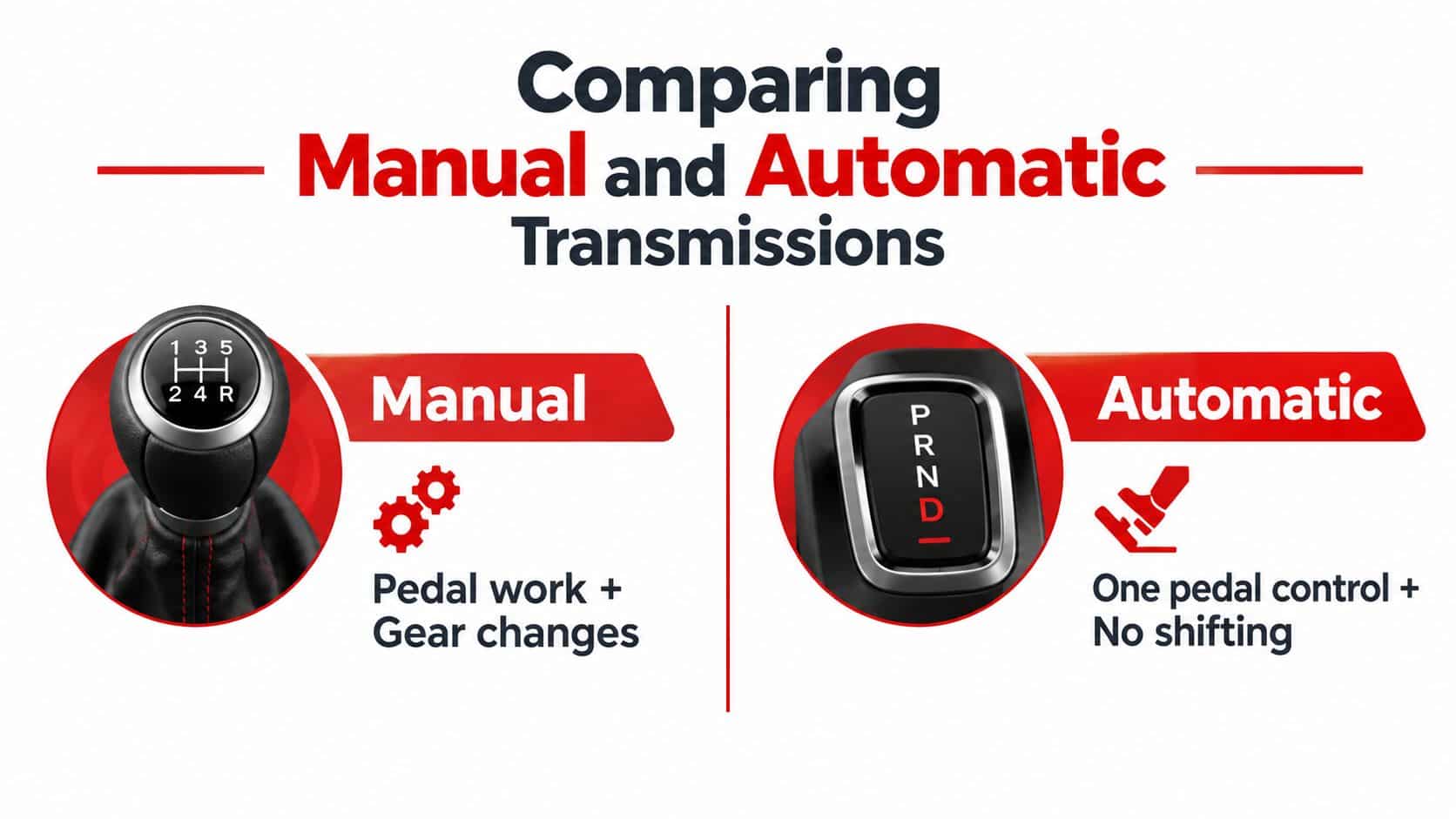
Manual and automatic cars get you to the same place, but they ask different things from the driver. In a manual, you coordinate the clutch, accelerator, brake, and gear lever. In an automatic, the car manages gear changes for you, so the driver's job is simpler from a control point of view.
What changes inside the car
A manual car gives you direct involvement in how the engine power reaches the wheels. That can be useful if you want full mechanical control, but it also means more steps every time you slow down, speed up, or pull away. An automatic takes away that routine work, which is one reason many nervous learners find it easier to settle in.
The pedals are different too. A manual usually means three pedals, clutch, brake, accelerator. An automatic usually means two, brake and accelerator. That sounds minor, but for a beginner it changes the rhythm of the whole lesson because there's one less thing to coordinate in busy traffic.
What you gain and what you give up
What you gain is a smoother learning curve and less physical demand, especially in stop-start traffic and on awkward junctions. What you give up is the ability to drive a manual car after your test, unless you later train and test in a manual vehicle.
That trade-off is straightforward. If your future driving will mostly be in automatic cars, the restriction may not matter much. If you expect to drive a range of vehicles for work or family reasons, a manual licence may still be worth considering.
The best transmission is the one that matches the car you'll actually use, not the one that sounds more impressive in conversation.
Does an Automatic Car Make the Test Easier
Automatic tuition removes the clutch, so it removes stalling, rolling back, and the stress of changing gear at the wrong moment. That is a real benefit. It does not change the standard an examiner applies on test day.
The practical test still depends on observation, mirror use, hazard response, road position, and clear judgement at junctions. Those are the parts that catch learners out, and they stay in place whether you drive a manual or an automatic. The link below tackles the common worry that automatic is somehow “cheating”, but the better answer is simpler than that, it changes the workload, not the standard: is learning in a automatic cheating.
Why some learners still struggle in an automatic
A car that doesn't stall can make a learner feel safer, which is helpful, but safety can slide into overconfidence if the driver stops scanning properly. Mirrors still matter. So do speed checks, lane discipline, and clear decisions at roundabouts and junctions.
Automatic lessons help most when the hard part is physical coordination. They don't erase the need to build good driving habits. If a learner has weak observation or poor anticipation, an automatic won't hide that for long.
What to focus on instead
The smart way to prepare for an automatic test is to put extra attention on the parts that remain unchanged. Keep your mirror routine consistent, look well ahead, and practise judging what other road users might do next. That's where test performance is won or lost.
If a learner wants a shorter version of the truth, it's this. Automatic makes some things simpler, but it doesn't make you a better observer by itself. The examiner still wants safe, tidy, predictable driving.
Who Benefits Most from Automatic Tuition
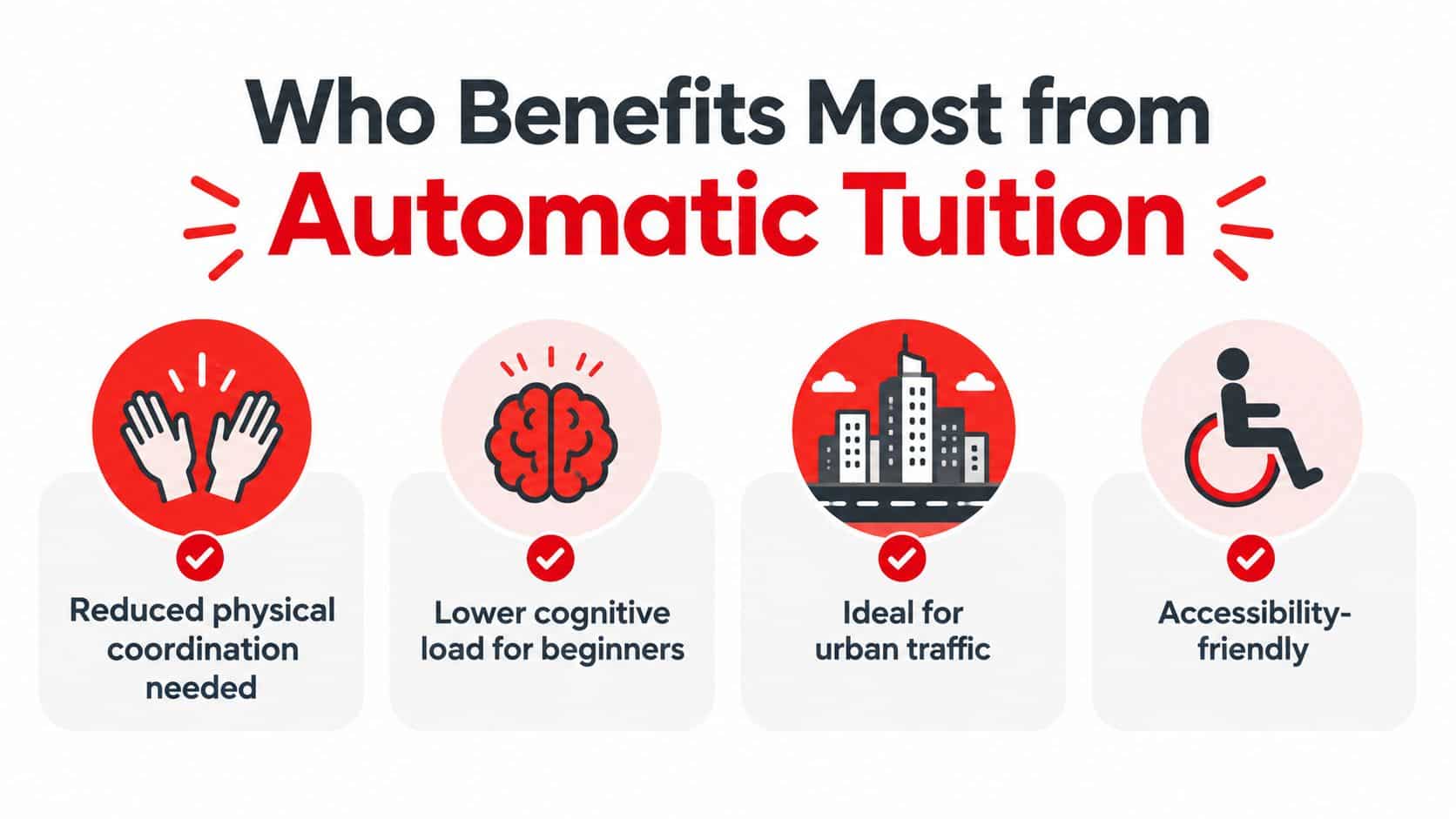
Automatic lessons suit learners who want fewer moving parts in the car so they can concentrate on the road. That includes nervous beginners who feel overloaded by clutch control, and people who want a calmer first experience behind the wheel. It can also suit drivers who are learning in dense traffic, where constant stopping and starting can make manual driving tiring.
The learners who often feel the difference most
Some people know quickly that they don't want the distraction of gears. Others discover it after one or two sessions in heavy traffic. Older learners often appreciate a simpler physical setup, because the lesson can feel less demanding without the extra footwork and hand movements.
Accessibility matters too. For some learners with coordination challenges or physical limitations, an automatic isn't just convenient, it's the practical route that makes driving possible in the first place. That's a meaningful difference, not a cosmetic one.
When automatic is the clearer choice
You don't need to love automatic cars to benefit from them. You just need to be honest about what slows you down. If changing gear makes you freeze, if hill starts make you tense, or if city driving already feels busy enough, automatic tuition can remove a lot of the friction.
Useful check: if your main fear is “I'll panic and stall”, automatic can reduce that fear. If your main fear is “I don't notice enough around me”, automatic won't solve that part, and you'll need focused instruction either way.
Choosing Your Vehicle and Booking Lessons
Once you've decided on automatic, the next step is finding a car that feels manageable and a school that teaches properly. Many learners like smaller automatic models because they're easy to place on the road and simple to park. Lendrum's own site, for example, points learners towards automatic options such as the Mini, Hyundai i10 and i20, and Volkswagen Golf, which gives you a sense of the kind of cars schools often use. Lendrum's list of cars for young drivers is useful if you want to compare typical learner-friendly models.
A good instructor matters just as much as the car. Look for a fully qualified ADI or PDI, ask about local pickup, and check whether the school can fit lessons around evenings or weekends if your week is already full. If you're booking in another jurisdiction or comparing paperwork, a practical overview like MTO driving rules for new drivers can help you understand how professional tuition is usually framed, even though the rules themselves vary by place.
What to ask before you book
- Vehicle choice: Ask which automatic models are available, and choose one that feels easy to sit in, see out of, and control.
- Instructor status: Ask whether the instructor is an ADI or PDI, because that tells you who is teaching you and under what standard.
- Lesson flexibility: Check whether the school offers local pickup and times that fit your routine.
- Lesson format: Ask whether they offer intensive training if you want to learn over a shorter period.
If you want structured, mixed-format training, schools like Lendrum's Driving School offer both automatic and manual lessons, along with intensive courses and motorway lessons for later stages. The right choice is the one that matches your availability and the way you learn best.
Planning Your Route to a Full UK Licence
A learner who books one automatic assessment lesson often gets the clearest answer quickly. The instructor can tell you whether automatic feels natural, whether your observation is already strong, and whether you'd benefit from a steadier pace or an intensive course. That first session also shows you how the car behaves in real traffic, which is always more useful than guessing from the roadside.
For the full licence route, the safest plan is to keep the theory test and practical tuition moving together. Theory knowledge helps with the practical, and practical driving makes the theory feel more relevant. Once you've passed, extra training like Pass Plus or motorway lessons can help you widen your experience without the pressure of a test day.
If you want a simple reference for what the practical test involves, the guide on the UK practical driving test is a sensible next read. Then book the first lesson, get honest feedback, and build from there.
If you're ready to learn in an automatic, Lendrum's Driving School offers structured tuition that fits nervous beginners, busy learners, and anyone who wants a calm route to test readiness. A first lesson can give you a clear view of whether automatic suits your confidence, your timetable, and the way you learn.
Book a lesson today
Book NowReady to pass your driving test with friendly, professional tuition and boost your confidence on the road? Book your lessons with Lendrum’s Driving School today and start your journey to becoming a safe, skilled driver.