
7 Reverse Parking Tips That Work in 2026
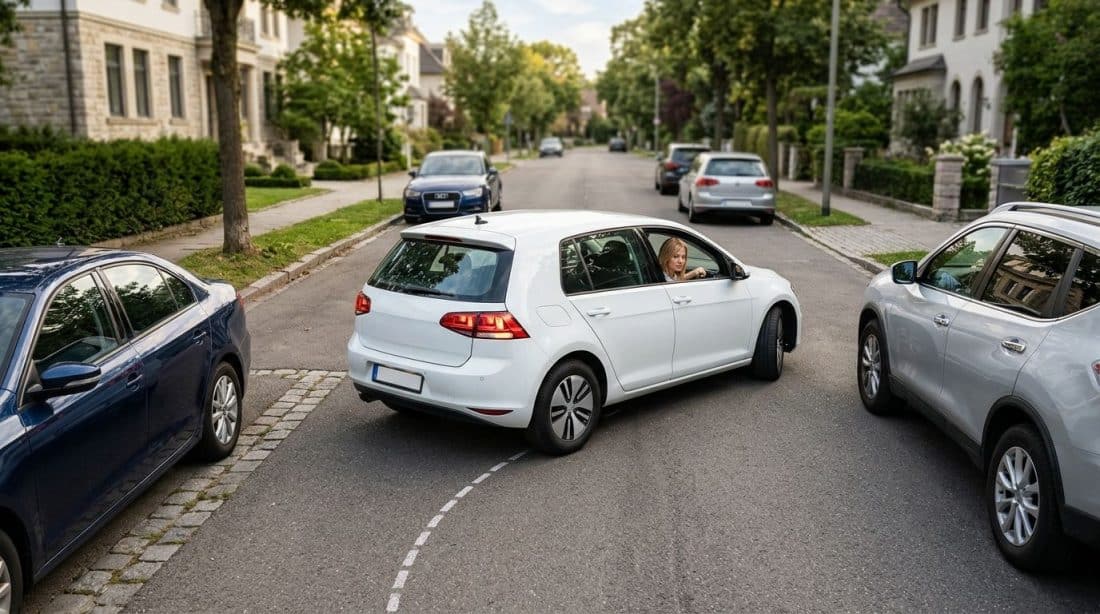
A tight gap on a narrow residential street can feel harder to judge in reverse, especially with traffic waiting behind you. The kerb seems closer than expected, and steering or speed can be difficult to judge under pressure. A repeatable routine makes the manoeuvre easier to understand and practise.
The UK driving test began in 1935; reverse parking manoeuvres were added later, as described in the BBC guide to the history of the UK driving test. For learners, the useful focus is on controlling the car and checking its position as it moves.
The checkpoints below build a test-ready routine around set-up positions, mirror checks and clutch control. They cover parallel and bay parking, as well as reversing around a corner. Lendrum's fleet examples and South Coast streets and car parks in Southampton, Portsmouth, Winchester and Plymouth offer familiar settings for practising. Move slowly, check your surroundings, and stop if you are unsure.
Table of Contents
- 1. Reverse Parallel Parking Using a Set-Up Position
- 2. Reverse Bay Parking with a Fixed Reference Point
- 3. Controlled Low-Speed Reversing Using Clutch and Brake
- 4. Mirror and Shoulder Check Routine for Reversing
- 5. Steering Timing Turning the Wheel at the Right Moment
- 6. Reversing Around a Corner Using Gradual Steering
- 7. Pre-Manoeuvre Positioning and Safety Checks
- 7 Reverse Parking Tips: Side-by-Side Comparison
- Turn These Checkpoints Into Confident Parking
1. Reverse Parallel Parking Using a Set-Up Position
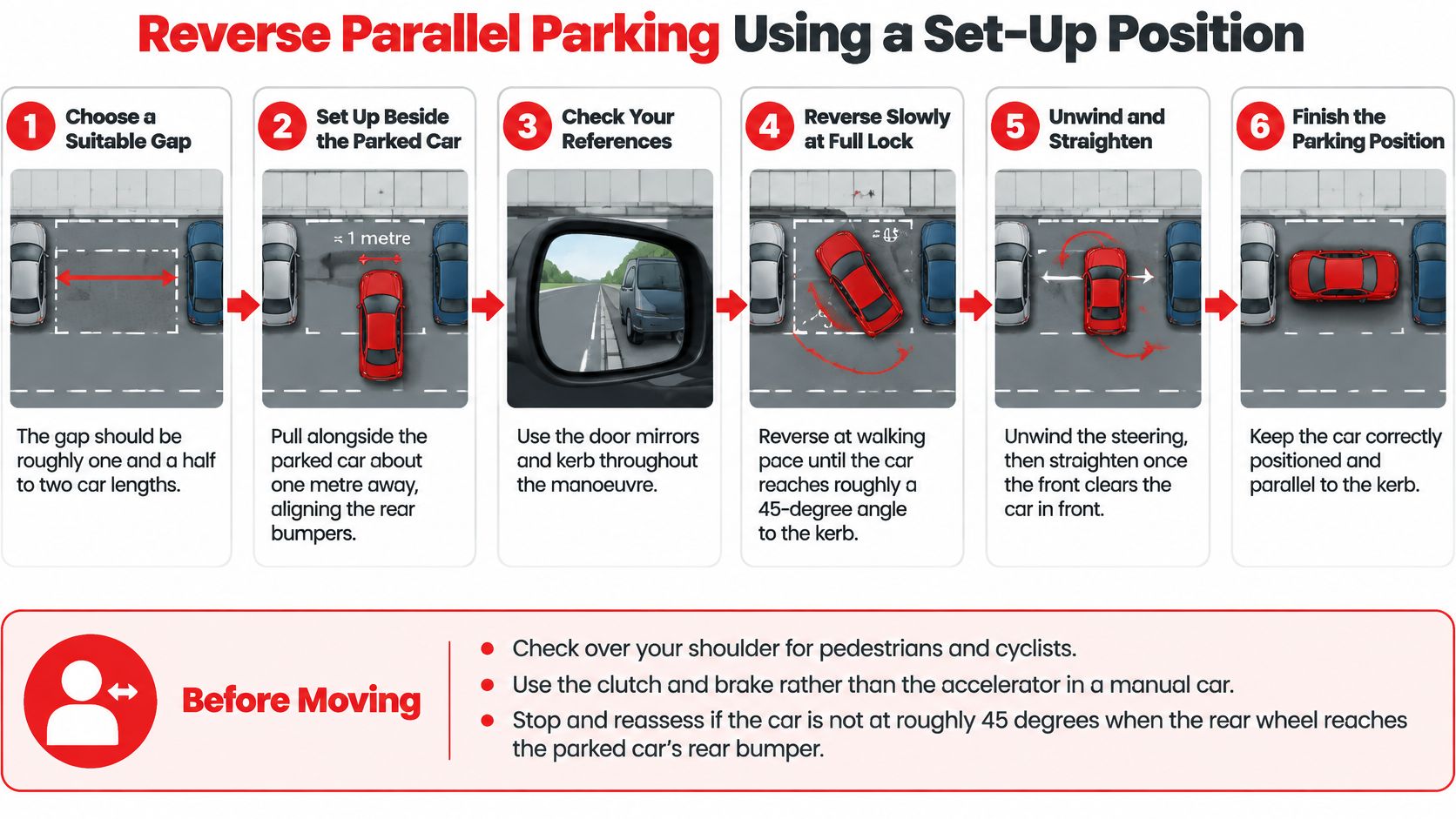
Start by making the space work for you. Pull alongside the car in front of the gap, about one metre away, and stop with your rear bumper level with its rear bumper. That alignment gives your rear wheels a predictable starting point and leaves room for your front to swing in without clipping the other car.
The six steps below show the sequence from set-up to straightening up.
Getting the Angle Right
Check all around, select reverse, and creep back at walking pace. Turn the wheel fully towards the kerb until your car sits at roughly 45 degrees, then begin unwinding the steering as the rear moves in. Once your front clears the car in front, steer away from the kerb to bring the front in and finish parallel.
On the UK test you're expected to finish within approximately two car lengths and reasonably close to the kerb, as explained in the official GOV.UK guide to car driving test results. A Southampton learner can use the rear bumpers as the first reference, while a Portsmouth driver might use a drain cover to judge kerb distance. Both work if the set-up stays consistent.
Watch the manoeuvre at real speed before you try it in traffic.
Practise first on a wide, quiet road. If you're not near 45 degrees when your rear wheel reaches the parked car's bumper, stop and reassess rather than forcing the turn.
2. Reverse Bay Parking with a Fixed Reference Point
Bay parking feels calmer because you're guiding the car into marked lines rather than towards a kerb. Drive past your chosen bay, position the car so you have room to swing the rear in, and pick one fixed reference point before you move. For many learners that's the bay line appearing in the passenger door mirror.
Use that same point every time at first. At a Southampton retail park, aligning the passenger mirror with the edge of the line tells you when to steer. In a Winchester car park, a painted kerb edge can mark where your rear wheels should stop.
A controlled finish is when the car settles between the lines.
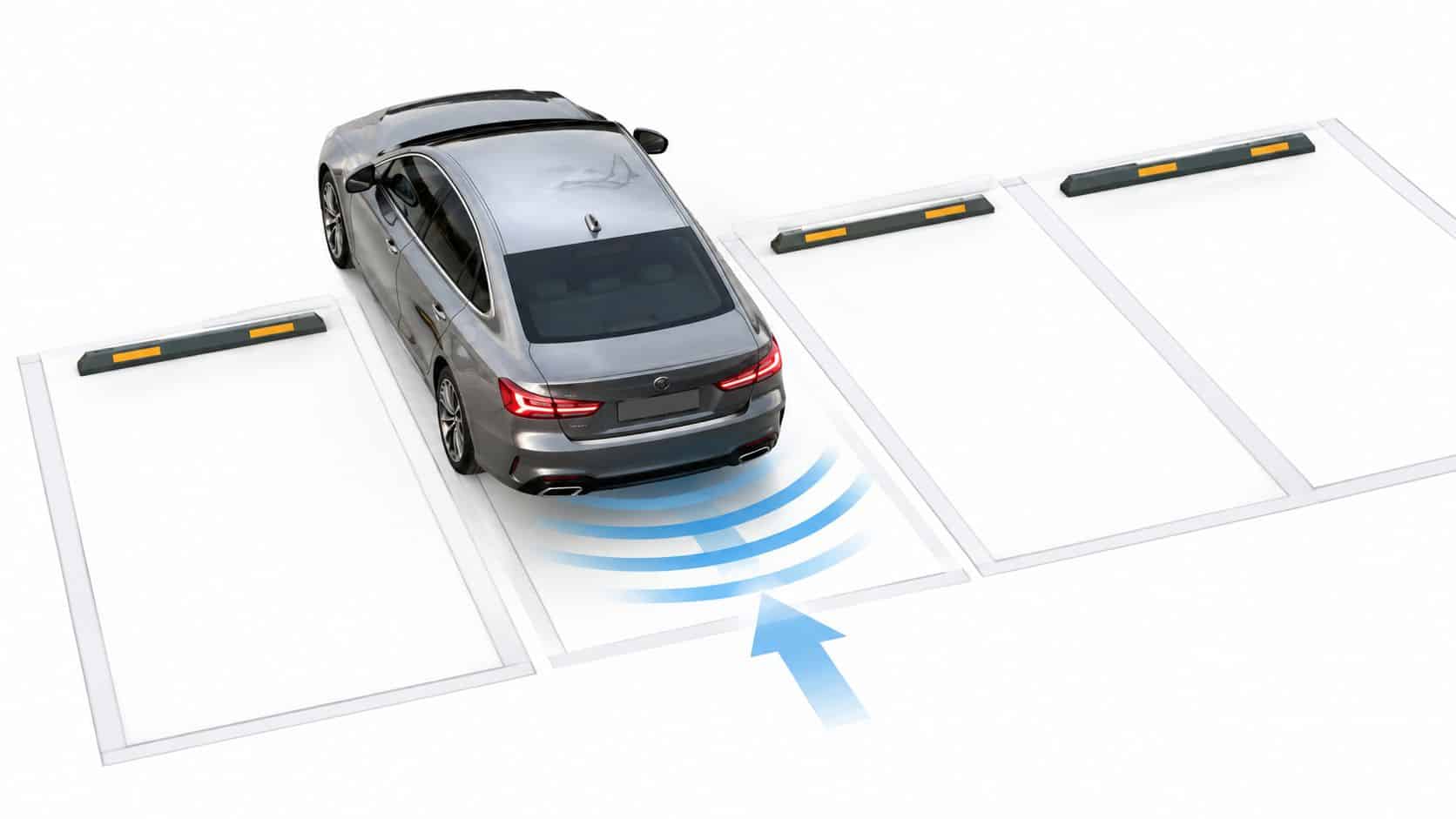
A Repeatable Bay Routine
- Choose your point early: Decide which line or mirror position triggers your steering.
- Creep and pause: Keep speed low enough to stop instantly if someone walks behind you.
- Watch the near side: Use the passenger mirror to track the line as the bay opens up.
- Check right last: Look over your right shoulder before the final straight reverse.
Your aim is to finish straight and central in the bay, with space on both sides. Try the same bay several times in one session so your sense of distance settles, then change bays. If you want more on why this repetition matters, read about why parking practice is essential during learning to drive.
3. Controlled Low-Speed Reversing Using Clutch and Brake
Speed is the checkpoint that makes every other checkpoint possible. Reverse too quickly and you can't check mirrors, judge the kerb or stop in time. Reverse at a creep and the whole manoeuvre becomes a series of small, correctable movements.
In a manual car, find the biting point and hold it so the car rolls back on idle or just above it. A learner in a Ford Fiesta can practise this in an empty car park, lifting the clutch a fraction at a time until the car barely moves. In an automatic Hyundai i10, you control the same creep with the brake, easing off gently rather than touching the accelerator.
Your feet do most of the work here, so their position matters.
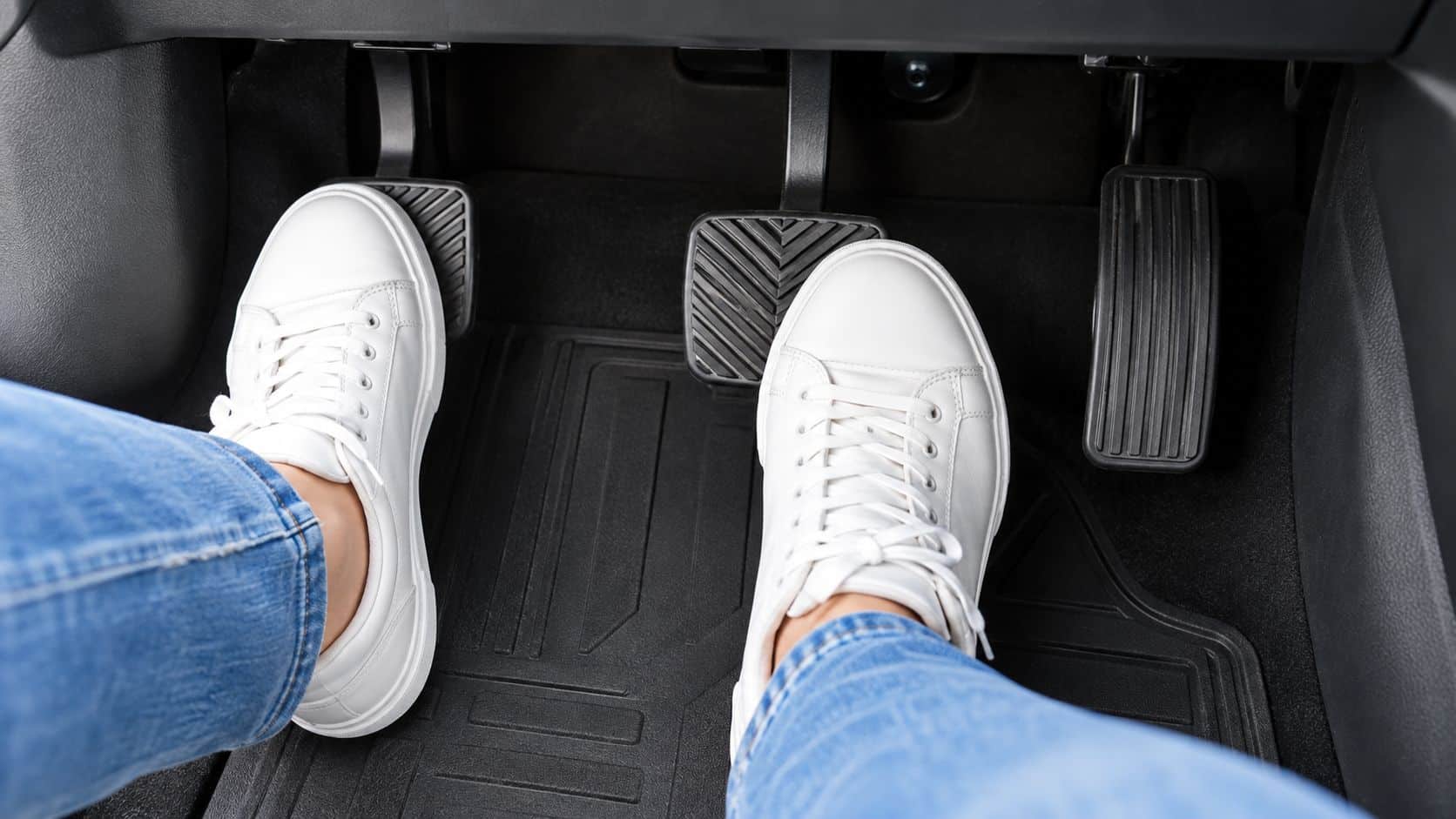
Practical rule: If you can't stop smoothly within a few centimetres, you're reversing too fast for parking.
Keep your feet ready on clutch and brake instead of hovering or swapping between pedals. Move a short distance, pause for mirror and shoulder checks, then move again. If you're unsure about distance or what's behind you, stop completely. A full stop costs you nothing and resets your judgement.
Learners who struggle with the biting point usually improve fastest with short, focused practice away from traffic. Structured manual driving lessons can build that pedal control before you add steering and observation on top.
4. Mirror and Shoulder Check Routine for Reversing
You can't see directly behind the car from the driving seat, so your observation has to be deliberate. The routine examiners look for combines the interior mirror, both door mirrors and a proper look over your shoulder in the direction of travel. DVSA examiner guidance treats effective all-round observation and consideration for other road users as core assessment criteria, as set out in the DT1 guidance for driving examiners on assessment and marking.
That guidance separates observation faults from control faults, which is why a mechanically tidy park can still be marked down. Build a repeating loop instead. Check mirrors, turn for a shoulder check, make a small movement, then stop and check again.
Notice how the driver turns her head and body, not just her eyes.
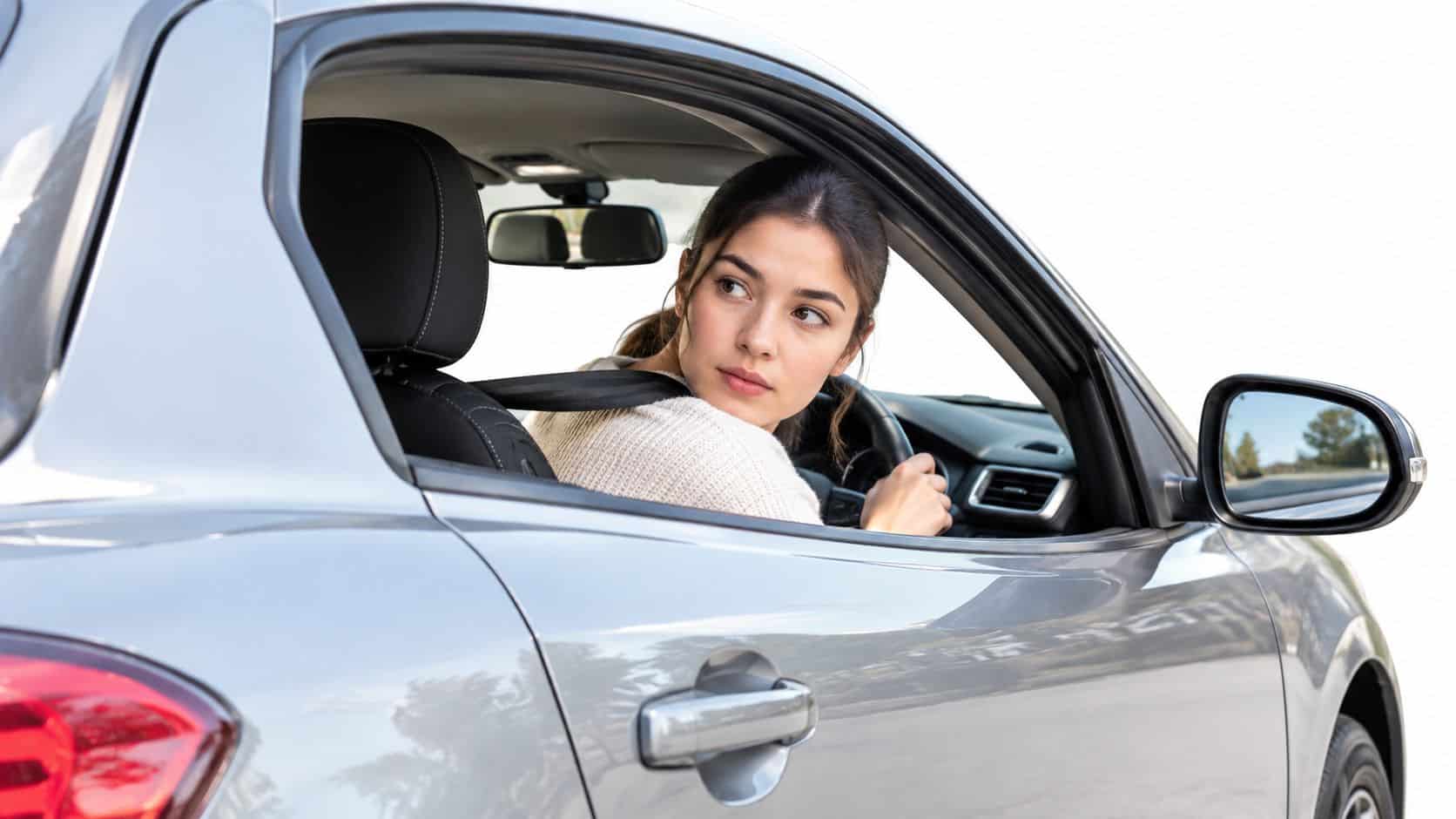
Building the Habit
A driver reversing a Vauxhall Astra out of a Plymouth driveway should look through the rear window before the car moves at all. In a Peugeot 208 at a Southampton supermarket, that same shoulder check is how you'd spot a pushchair in your blind spot. Sensors and cameras can support you, but they don't replace your own checks.
Pause before every steering change and before the final movement. If a pedestrian, cyclist or vehicle enters your path, stop immediately and wait. Slow speed keeps these checks effective, and repetition makes the loop automatic.
5. Steering Timing Turning the Wheel at the Right Moment
When you reverse, the back of the car goes where you turn the wheel. Turn towards the kerb and the rear moves towards the kerb. That simple link is worth saying to yourself until it feels natural, because most steering errors come from expecting the car to behave as it does going forwards.
Timing matters more than effort. In a Volkswagen Golf, you might begin your turn when your front bumper draws level with the parked car, bringing the rear into the gap. In a Škoda Fabia, you'd unwind the steering as soon as you reach about 45 degrees, otherwise the rear keeps swinging and meets the kerb.
Parked cars on a residential street like this show the spacing you're aiming to match.
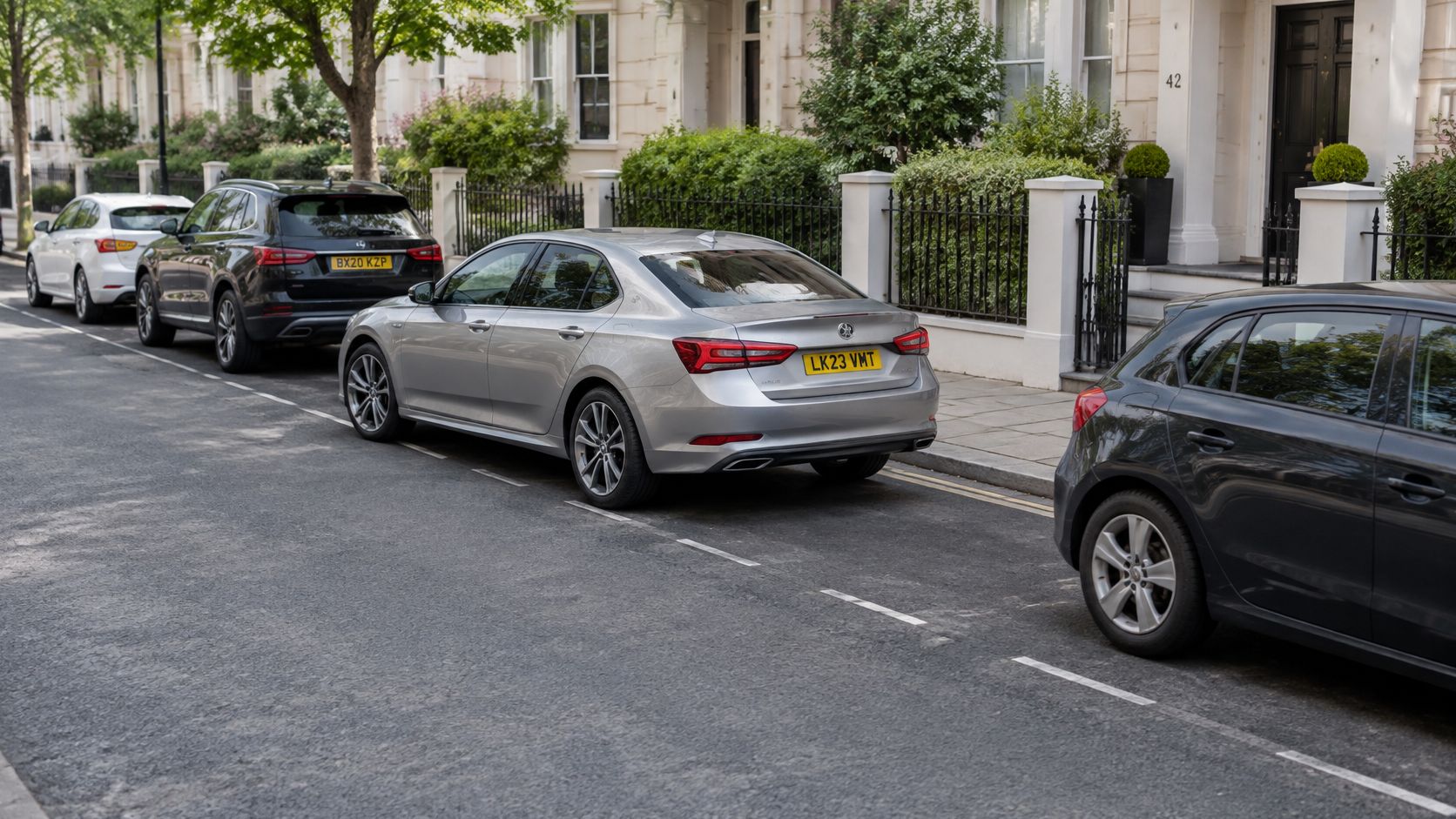
- Learn your own car: Turning points differ between models, so don't copy someone else's exactly.
- Steer smoothly: Jerky inputs make the rear swing unpredictably at low speed.
- Unwind in time: Bring the wheel back as the car enters the space to avoid overshooting.
- Use both mirrors: They tell you when the car is straight before you stop.
Turn late and you'll need a sharp correction. Turn early and unwind late and you'll cut in too sharply. Small, smooth inputs give you time to fix either one.
If the car doesn't respond as expected, stop. A pause lets you work out which way the wheel needs to go before you move again.
6. Reversing Around a Corner Using Gradual Steering
Reversing around a corner asks you to follow a curve backwards from one road into another. It's less common in daily driving than bay or parallel parking, and the DVSA has considered replacing less common manoeuvres like this with everyday tasks such as reversing out of a bay. Even so, the skills transfer directly to any curved reverse, including driveways and car park ramps.
Start close to the kerb on the main road, check the junction carefully, and reverse at walking pace. Use gradual steering so your rear wheels follow the kerb around the corner while your front swings clear. Your passenger door mirror is your main guide for kerb distance, but it can't show you traffic approaching the junction.
Staying Safe at the Junction
A learner reversing from a main road into a quiet Southampton side street needs to keep checking back towards the junction, not just at the kerb. In Plymouth, a driver following the kerb with the rear wheels should still stop if a car turns in. The manoeuvre only continues when the junction is clear.
Begin with a wide, gentle curve and tighten it as your judgement improves. Practise in quiet residential areas where you can stop without holding anyone up. If traffic approaches, stop, let it pass, and restart your checks from the beginning. Rushing the curve is what pushes learners wide into the side road or up onto the kerb.
7. Pre-Manoeuvre Positioning and Safety Checks
Good reverse parking is mostly decided before you select reverse gear. Where you stop determines your view, your steering angle and how many corrections you'll need. Learners who rush this stage spend the rest of the manoeuvre recovering from a poor starting position.
Choose a starting point with a clear view of the target space and the road around it. A learner in a Mini Cooper in Portsmouth might stop slightly earlier on a clear stretch so parked cars don't block the view. A driver in an automatic Hyundai i20 leaving a Winchester car park should check for pedestrians and signal before moving, because other drivers need to know what you're doing.
Your Pre-Move Sequence
- Position for vision: Stop where you can see the space, the kerb and approaching road users.
- Check everything: Mirrors, blind spots and a look over your shoulder before you move.
- Signal when it helps: Use indicators if your reverse could affect traffic behind you.
- Wait it out: Let pedestrians and cyclists clear the area completely before starting.
Where you park matters after the manoeuvre too, so it's worth knowing the rules on Highway Code parking near a junction before you choose a space. Run the same checks in the same order every time. That consistency is what turns a checklist into a habit you can rely on under test pressure.
7 Reverse Parking Tips: Side-by-Side Comparison
| Technique | 🔄 Complexity | ⚡ Resources and requirements | 📊 Expected outcome | ⭐ Ideal use case and key advantage |
|---|---|---|---|---|
| Reverse parallel parking using a set-up position | Intermediate; precise positioning and steering timing | A gap of roughly 1.5–2 car lengths, mirrors, kerb references and slow speed | Car positioned parallel and close to the kerb | Urban kerbside parking; builds spatial awareness and provides a repeatable method |
| Reverse bay parking with a fixed reference point | Beginner to intermediate; usually a predictable path | Marked bay, clear reference point and mirror checks | Car centred within the bay | Car parks and driveways; generally easier to judge than parallel parking |
| Controlled low-speed reversing using clutch and brake | Beginner; clutch control may take practice in a manual | Manual: clutch biting point and brake. Automatic: brake control | Slow, controlled movement with more time to observe and stop | Any reversing manoeuvre; improves precision and transfers across parking situations |
| Mirror and shoulder check routine for reversing | Beginner; requires a consistent observation habit | Interior and door mirrors, shoulder checks and frequent pauses | Better awareness of pedestrians, cyclists and obstacles | All reversing situations; reduces the risk of striking unseen hazards |
| Steering timing: turning the wheel at the right moment | Intermediate; timing varies by vehicle | Steering input, mirrors and vehicle-specific reference points | More accurate positioning with fewer corrections | Parallel parking, bay reversing and corner manoeuvres; helps prevent overshooting |
| Reversing around a corner using gradual steering | Intermediate; requires path planning and observation | Quiet practice area, kerb reference, mirrors and very low speed | Controlled curved path while keeping appropriate distance from the kerb | Residential roads and test preparation; develops curved-path control and junction awareness |
| Pre-manoeuvre positioning and safety checks | Beginner; simple but must be done consistently | Suitable starting position, clear visibility, mirror and blind-spot checks; signal if needed | Safer, more efficient manoeuvre with fewer corrections | Before any reverse manoeuvre; improves visibility and helps identify hazards early |
Turn These Checkpoints Into Confident Parking
Structured repetition isn't busywork. Government test data recorded reverse parking on 611,151 car practical tests in 2012, with faults on 317,424 of those manoeuvres, around 51.9%, including 85,935 serious faults and 2,198 dangerous faults, according to the UK government driving test data on reverse parking manoeuvres. Those figures describe manoeuvres, not your personal chance of failing, but they show why this skill deserves deliberate practice.
The same data recorded 371,589 reverse parks on the road and 239,539 in a car park. So don't only practise in empty bays. Split your sessions between marked bays and roadside gaps in Southampton, Portsmouth, Winchester and Plymouth, and vary the bay widths and parked car spacing you use.
Work on one reference point at a time at walking pace. Practise your set-up position until it's boring, then add the mirror loop, then steering timing. When each checkpoint feels repeatable on its own, combine them in real streets and car parks with traffic around you.
Think about where you leave the car as well as how you park it. Choosing a visible, well-used space and following sensible parking lot crime prevention strategies protects your car after you've parked it well. Good parking doesn't end when you apply the handbrake.
If you'd like structured help, Lendrum's Driving School offers manual and automatic lessons across Southampton, Portsmouth, Winchester and Plymouth, with step-by-step coaching on parallel parking, bay parking and other test manoeuvres. A calm instructor beside you can spot whether your set-up, speed or observation needs work. That targeted feedback usually shortens the trial and error.
Lendrum's Driving School provides manual and automatic lessons, intensive courses and Pass Plus training across Southampton, Portsmouth, Winchester and Plymouth, including focused practice on reverse parking and test manoeuvres. If parallel parking or bay parking is holding back your test readiness, book structured tuition and build each checkpoint with an instructor beside you. Visit Lendrum's Driving School to find lessons near you and get started.
Book a lesson today
Book NowReady to pass your driving test with friendly, professional tuition and boost your confidence on the road? Book your lessons with Lendrum’s Driving School today and start your journey to becoming a safe, skilled driver.